Twenty Years Later: The Orienteering Elite Returns to Where It All Began
Twenty years ago, a story began in Druskininkai that is coming full circle this year: Europe’s elite orienteers are returning to the very same forests of the Dzūkija region. In 2006, many of today’s biggest stars took their first steps on the international stage here. Now, Lithuania is preparing to host the largest orienteering event in its history.
From 22nd to 27th September, Druskininkai and the Lazdijai district will host the European Orienteering Championships alongside the final round of the Orienteering World Cup. But this championship carries a special symbolic meaning. Exactly twenty years ago, these same forests became an international orienteering hub when they hosted the World Junior Orienteering Championships (JWOC).
A place where generations of orienteers have grown
The 2006 World Junior Orienteering Championships in Druskininkai became much more than just another international event for Lithuanian orienteering. For many athletes, it was their first experience of top-level international competition. For Lithuania, which had already successfully organised several major international events, it was another important milestone and an opportunity to prove that it had both the expertise and the capability to host world-class competitions.
“Lithuania had already earned an excellent reputation through the 1996 Orienteering World Cup in the Curonian Spit and the 2001 World Masters Orienteering Championships, which attracted nearly 3,000 competitors from around 44 countries. We brought all of that experience into the 2006 World Junior Championships. We chose Druskininkai to showcase the diversity of Lithuanian terrain: the long-distance race took place in the Noškūnai Forest, the middle distance in Petroškai Forest, while the relay was held in Druskininkai Forest with the event centre between Lakes Druskonis and Vijūnėlė.
Then we received a letter from the IOF President asking whether Lithuania would be willing to include sprint races in the championship programme. We simply couldn’t miss the opportunity to become the first organisers of a World Junior Championships featuring this new format. Naturally, it brought additional organisational challenges, but it was also a tremendous vote of confidence in Lithuania,” recalls Rimantas Mikaitis, organiser of the 2006 championships.
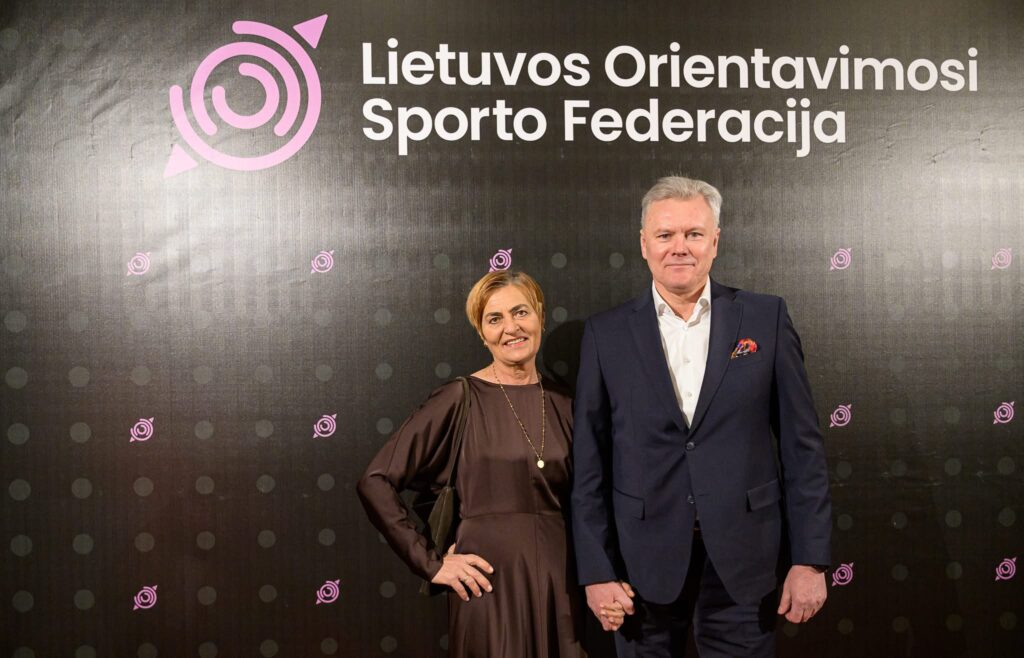
According to Mikaitis, during the World Championships held later that year in Denmark, International Orienteering Federation officials were already asking Lithuania when it would be ready to organise a World Orienteering Championships.
“That showed they trusted us and valued our experience and capabilities. At the time, though, I never imagined it would take so long to answer that question—that we would have to wait until a new generation of Lithuanian orienteers had grown up, taken on leadership roles, and set out to organise an event of this calibre themselves.”
Among that new generation is Vilius Aleliūnas, the current Event Director of the European Championships, who himself competed in the 2006 World Junior Championships in Druskininkai.
Returning to the same forests – but they are no longer the same
Twenty years later, athletes will once again race through Petroškai Forest. Yet while the terrain may appear familiar at first glance, in orienteering almost everything changes over two decades.
Egidijus Kukenys, the chief mapper for the European Championships, explains that creating the map for the 16-square-kilometre Petroškai–Klepočiai forest area required around 750 hours of fieldwork—and the work is still not finished.
“Forests constantly change because of natural processes and human activity, so before the championships we’ll spend another couple of weeks checking and updating the finished map,” says Kukenys.
Although Lithuanian forests lack the rocky terrain and boulder fields typical of Scandinavia, they present a completely different set of challenges for orienteers.
According to Kukenys, the greatest challenge is accurately mapping runnability, particularly in areas where spruce forests have been damaged by spruce bark beetle infestations. Yet it is precisely the terrain that makes Petroškai Forest one of Lithuania’s finest orienteering areas.
“This is one of Lithuania’s true gems for orienteering. The forest is full of depressions, hills, slopes of varying steepness cut by gullies, and beautiful natural hornbeam stands. It’s endlessly fascinating to map a place where every hill hides a new surprise.”
From junior starts to the European Championships
Rimantas Mikaitis has no doubt that the 2006 championships left a lasting legacy for Lithuanian orienteering.
“I’ve heard this year’s Event Director, Vilius Aleliūnas, say that without the 2006 World Junior Championships in Druskininkai, there would be no 2026 European Championships. It’s wonderful to see that the original vision has remained intact: Druskininkai, Noškūnai Forest, Petroškai Forest… All of it brings back memories.”
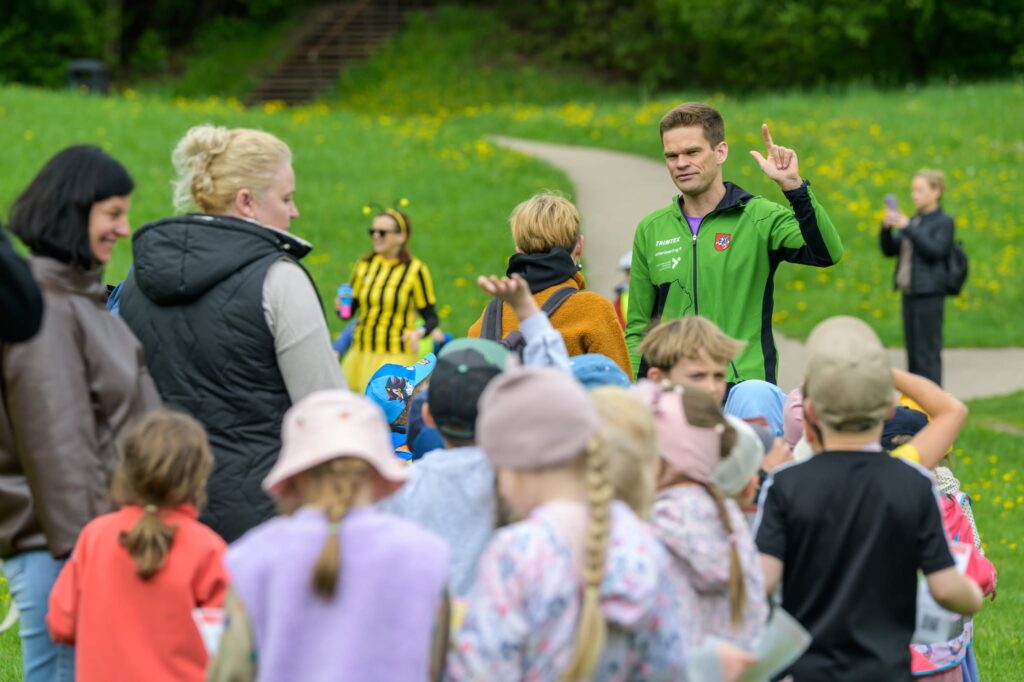
Vilius Aleliūnas agrees:
“In 2006, Lithuania showed it could organise an unforgettable World Junior Orienteering Championships. In 2026, we want to show even more. We want every athlete who comes to Lithuania to leave with more than memories of technically demanding courses and the beautiful forests of Dzūkija. We want them to remember a country that truly loves orienteering. If, twenty years from now, someone looks back on these championships the way we remember 2006 today, we’ll know we’ve done our job well.”
From 22 to 27 September, Druskininkai and the Lazdijai district will host the European Orienteering Championships and the final round of the Orienteering World Cup. The week-long event will be one of Lithuania’s largest international sporting events of the year, bringing together Europe’s strongest orienteers, hundreds of team members, and thousands of orienteering enthusiasts from across the continent.